


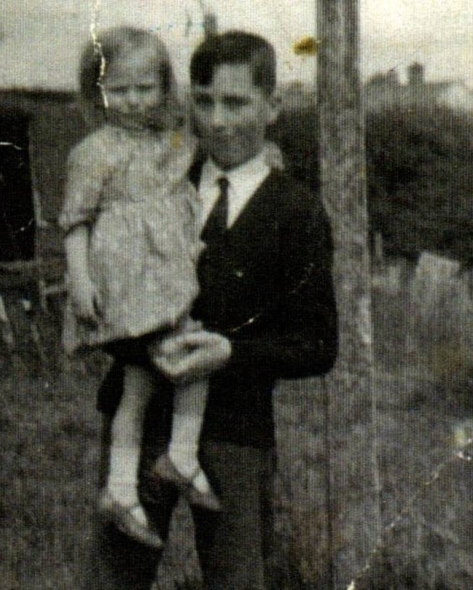
Carmel talks about her family’s struggles, the living conditions and her father going to England to get work.
She recalls the morning of internment and being evacuated from Ballymurphy. Seeing her brother, John Laverty, for the last time before he was murdered.
The impact of grief on the family.
Beginning to seek answers to what happened. The Ballymurphy Massacre campaign.
Reflecting on what they endured and what it means to have peace today.
Audio transcript
00:00:03.7 00:02:12.8 Youngest of 11 children. Family lived in a one bedroom tenement in the 1950s. Father had to go to England for work. Sister contracted TB, was sent to Switzerland by the Red Cross for treatment.
00:02:12.8 00:03:56.8 Red Cross didn’t want her sister returning from treatment to a one bedroom tenement. Red Cross worker threatened to expose the blatant discrimination when the council refused to rehouse them. They were then allocated a house in Ballymurphy.
00:03:56.8 00:09:00.2 Family background. Father’s workplace injury, buying a mobile shop to serve the area. Family home life.
00:09:00.2 00:11:02.7 School days. Primary school teachers from outside the area didn’t understand the impact of the conflict on children. Secondary school a positive experience with the influence of Sr. Genevieve.
00:11:02.7 00:13:07.1 Work days. Employed in first job after initial discrimination.
00:13:07.1 00:16:24.8 Meeting husband, getting married. Describing events on wedding day. Setting up home. First child born.
00:16:24.8 00:19:23.2 Becoming aware of political events. Facing sectarianism. Family history, aunt interned in 1940s, father related to Tom Williams.
00:19:23.2 00:21:17.5 Reflecting on her mother’s grief and humanity, her son was murdered by British paratroopers, a few months later she comforted a dying British soldier on the street.
00:21:17.5 00:22:43.1 Reflecting on the impact of conflict on individuals and communities. Attitudes changing as they grow older.
00:22:43.1 00:26:48.6 Recalls when seven years old. Dealing with CS Gas in the house. Her brother helping them get from her aunt’s home back to Ballymurphy during a riot. Being given shelter in a house along with others.
00:26:48.6 00:30:36.3 August 09th, morning of internment, 6 people shot dead in Ballymurhpy. August 10th recalls being evacuated. Her brother John waving goodbye to her, the last time she saw him alive.
00:30:36.3 00:32:39.1 Evacuated families being attacked by loyalists at train station while RUC stood by.
00:32:39.1 00:35:32.5 Being put in an Irish army camp in Kildare. Describes conditions in camp, well treated by soldiers. Seeing sisters with priest then told that they were going home.
00:35:32.5 00:40:02.6 On the train journey home her sisters sobbing but she didn’t know what was happening. Back in Belfast brought to aunt’s house where her older cousin broke the news of her brother’s murder.
00:40:02.6 00:43:49.4 The British army harassing the families of those they had murdered. Reflecting on how great previous Christmases were in the home but how it had changed completely, family broken with grief.
00:43:49.4 00:46:36.7 1998 getting John’s inquest papers that revealed for the first time how he was killed. Shot in the back and leg and left to bleed to death. British army told lies that they had shot gunmen. Campaign begins to reveal the truth.
00:46:36.7 00:48:44.5 RFJ advised on getting testimonies from those who witnessed what happened in August 71. Went from door to door. Pressures of public speaking to tell the stories.
00:48:44.5 00:51:18.6 Pressure of campaigning, retelling the story and reliving the trauma. Working on campaign for truth and raising a young family.
00:51:18.6 00:53:06.6 Reflecting on loss and how it impacted the family. The family faced tragedy again with death of child. Enduring trauma and harassment every day.
00:53:06.6 00:56:17.2 Reflecting on life today and the peace process. Her children achieving what was never possible in previous generations.