Joe tells us about his early childhood and the experiences he had when his family emigrated to Australia for a few years before returning to Belfast in 1967.
His family had no interest in politics, but this changed for him when as a child he witnessed the beginning of the pogroms in his area in august 1969.
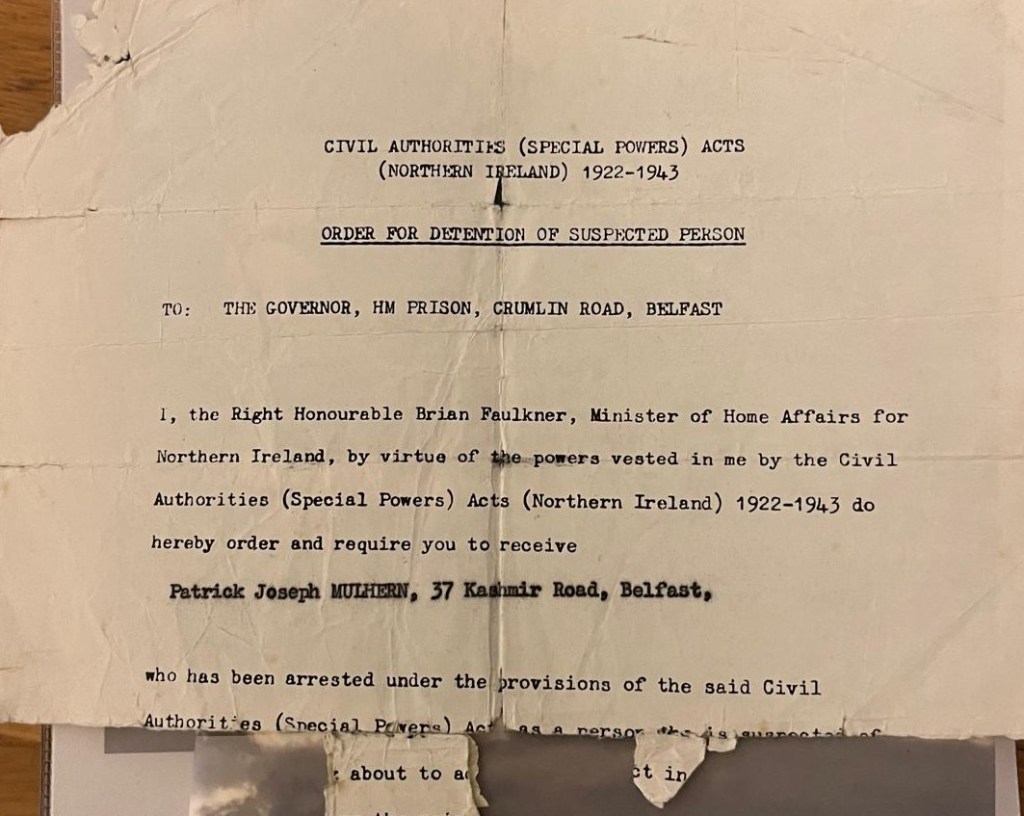
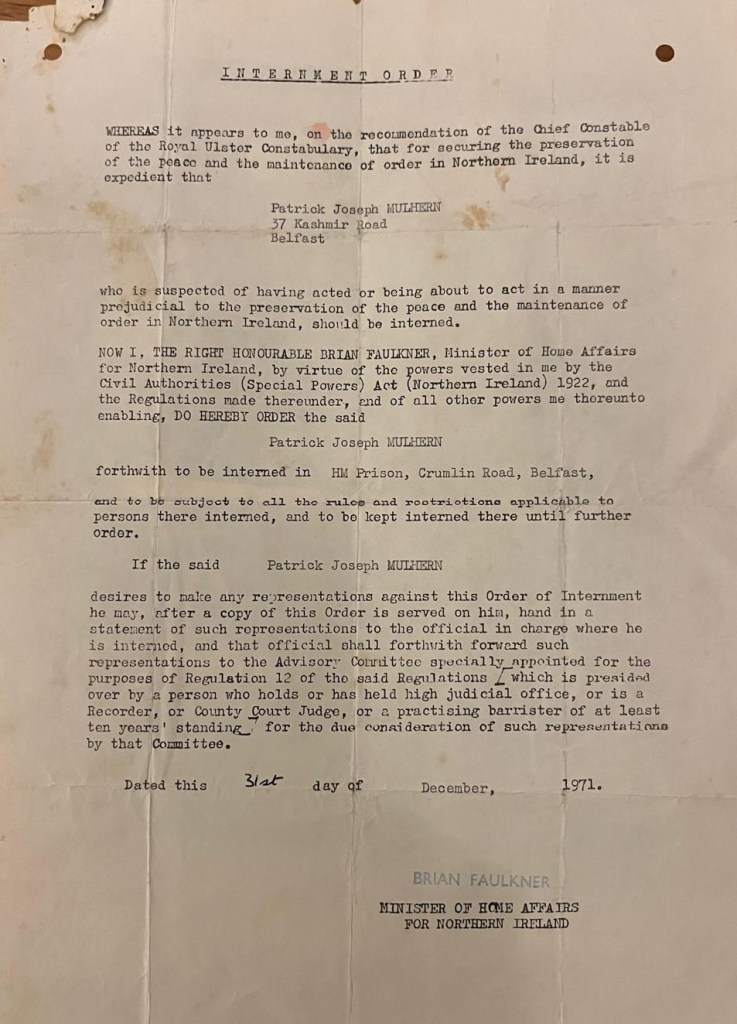
He was 17 years old and still at school studying for his A Levels when he was arrested and interned in December 1971.
He describes his time as a schoolboy internee and the obstacles he faced from the authorities in his attempt to continue his studies.
He talks about life after release and the impact of being interned at such a young age had on his later life and career.
He reflects on his own achievements and how far his community has come on since his childhood and the pride and hope he has for the young people in shaping society.
Audio Description
00:00:00.0 00:04:12.2 Family background growing up in 1950s. Father was a businessman, very religious and well known. Family very connected to Clonard Monastery.
00:04:12.2 00:07:48.8 1963 the family emigrated to Australia. Great memories of Australia and the lifestyle. 1967 decision made to return home to Ireland.
00:07:48.8 00:11:01.8 As a child didn’t comprehend the changes 4 years away would make to friendships. No politics in the household, only religion. Considered becoming a priest.
00:11:01.8 00:13:52.0 August 1969 standing on the street and witnessing the beginning of the pogroms and the burning of houses. Seeing people defending the area, recalling the fear.
00:13:52.0 00:16:30.8 Anger at some men for lack of response to the crisis. Became very interested in history and politics. Witnessed the conflict developing.
00:16:30.8 00:19:45.5 Joe organised protests and actions against British army occupying their school. His father was arrested and traumatised, Joe then taken away by British army, he was 17 years old, his family couldn’t locate him.
00:19:45.5 00:23:37.1 Interrogated and assaulted. Moved between interrogation centres. Refused toilet facilities and kept in isolation.
00:23:37.1 00:27:02.5 Put in Crumlin Road Gaol. Had to share cell with 3 men. Being so young the prison staff acted more aggressively toward him.
00:27:02.5 00:29:58.0 Visit from distraught parents. Authorities refuse to organise for him books to continue his A Level studies.
00:29:58.0 00:35:18.5 A prison officer secretly brought books and paper to his cell. Prisoners tried to organise it for him to be able to study but it was difficult without a teacher to guide him. Reflecting on financial burden on family.
00:35:18.5 00:38:59.9 Interned. Transferred to Long Kesh by helicopter, very frightening experience.
00:38:59.9 00:41:24.1 Pushing for access to education. Had to use visit periods for teachers tutorials. Environment in Cages made study for A Levels very difficult.
00:41:24.1 00:44:18.2 British army early morning raid on hut.
00:44:18.2 00:45:26.9 Activities and weekly routines. Using writing skills to write marriage proposals.
00:45:26.9 00:49:16.6 Brought to medical room with head injury. Kindness of medical officer.
00:49:16.6 00:51:42.2 Recalling release day. Being interned piqued his interest in nature and walking. Involved in community development.
00:51:42.2 00:56:48.3 Impact of internment was exacerbated because there was no measures for dealing with those traumatised. Released into a traumatised community. Tried to go back to school to continue education.
00:56:48.3 00:59:05.0 Impact of internment on later life as he had school years taken away from him. Eventually achieved ambition of becoming a teacher.
00:59:05.0 01:01:17.5 Reflections on what it means to feel liberated. The achievements of the community today by rising above oppression.
01:01:17.5 01:05:10.4 Parents dealing with his internment, always supportive of him. Proud of his achievements. They came to realise the conditions they were living under.
01:05:10.4 01:06:56.4 Reflecting on the success of Feile an Phobail and proud of the behaviour and confidence of the young people. Proof of a new dispensation.